US struggling to de-risk Congo's 'war zone minerals' even after pact, sources say

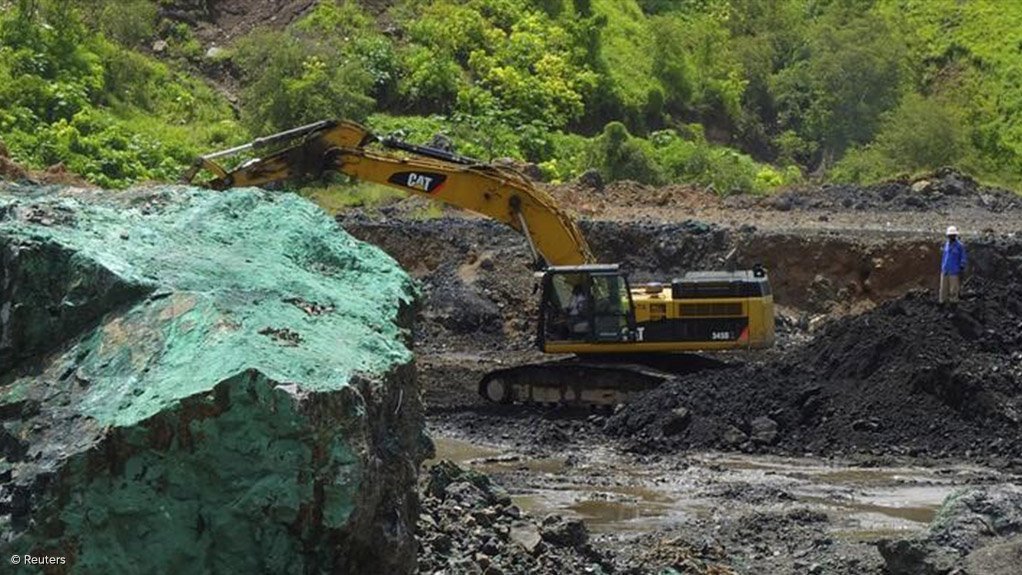


The US has made progress in its push to prise Congo's strategic minerals from China's orbit, but conflict, contested licences and compliance demands are still slowing Washington's advance into a region its rival dominates, diplomats and industry officials said.
Democratic Republic of Congo, which hosts the world's largest cobalt supply and rich copper and lithium reserves, is central to the US push to cut the West's reliance on China for rare minerals.
After the US and Congo signed a minerals pact in December, Kinshasa last month handed Washington a 44-project shortlist spanning copper, cobalt, lithium, tin, gold and hydrocarbons, Reuters reported.
The US–Congo partnership is meant to unlock investment, the US State Department said, and support implementation of a peace deal Washington brokered between Congo and Rwanda, which Kinshasa has accused of supporting M23 rebels fighting Congolese troops in its east.
But several of the shortlisted assets sit in politically fraught zones or carry permitting disputes, making quick, reliable mining deals unlikely, said the sources, who include Congolese government and mining officials. They asked not to be named because the discussions are sensitive.
CONGO SLOWING DEALS, SOURCE SAYS
One US diplomat said Kinshasa is deliberately slowing new deals to push Washington to increase pressure on M23 before any further steps are taken. Reuters could not independently verify the claim.
The Congolese government did not immediately respond to requests for comment. On background, a senior government official described the allegations as "speculation".
"The agreement has its own rhythm: a period for receiving offers, a period for negotiation," the official said. Rwanda, which denies backing M23, did not immediately respond to requests for comment.
The US State Department told Reuters the US remains "deeply concerned" by violence in eastern Congo and is pushing regional partners to reinforce the ceasefire, urging Rwanda to end M23 support and withdraw in line with December's peace deal.
The department said Washington hopes to see swift progress on key deals, including a proposal for Glencore to sell copper and cobalt assets to the US-backed Orion consortium, US-based Virtus Minerals’ bid for Congo-focused Chemaf, and the extension of the Lobito Corridor railway line.
Kinshasa's inclusion on the shortlist of the Rubaya mine, which supplies about 15% of global coltan and sits under M23/AFC control, signals Congo wants stronger US action on M23, said Joshua Walker of NYU's Congo Research Group.
Investment is unlikely while the group holds territory, he said.
US influence on security has already been seen at some mines. Alphamin Resources restarted its Bisie tin mine only after US diplomatic pressure helped ease fighting in territory around the site, though it warns that renewed clashes could threaten access and operations.
PERMITTING GRIDLOCK
Congo's permitting gridlock is a structural brake on new US investment, said Michael Bahati, chief analyst at advisory firm Ascendance Strategies, but additionally some assets on Kinshasa's list are mired in disputes, incomplete rights and ownership records, and slow transparency reporting.
At Manono, a global-class lithium resource, US-backed KoBold is currently trying to settle a dispute with Australia’s AVZ, while China’s Zijin in the same area is preparing shipments in June.
High-grade copper-cobalt assets, including the Chemaf and Gecamines' concessions, face political disputes and permitting histories that deter Western lenders. Chemaf's sale to US-backed Virtus has slowed after the owners signaled that the roughly $30 million bid does not cover the firm's heavy debts.
Even for so-called "easy wins" — tailings reprocessing, for instance, or proposed cobalt refineries — Kinshasa has signaled that success hinges on governance reforms and security guarantees that only Washington can help deliver.
The bottlenecks expose a gap between US strategic intent and its ability to mobilise capital at speed, said Geraud-Christian Neema, an analyst of the geopolitics of natural resources in Africa.
Washington’s focus remains on "ready-to-produce" assets. A longer-term shift would require US companies willing to shoulder Congo-level risk and wait years for returns, a commitment "not many US firms are prepared to make", he said.
WESTERN PROCEDURE VS CHINESE PACE
Congolese officials acknowledge they want American players to move faster, but say they cannot circumvent compliance obligations.
While US and other Western firms are often bound by obligations such as clearing anti-bribery checks, proving clean title chains, and documenting community impact risks, Chinese companies are not subject to the same regimes.
At Manono, Zijin’s head-start in building out roads, power and port links is already shaping the project. KoBold’s Congo head said the company will look to share that infrastructure once its ownership disputes are resolved, a pace that reflects the compliance burden US-backed firms face.
The contrast is clear for Congo's mining sector - Chinese operators can absorb uncertainty that Western firms cannot, allowing Beijing-linked companies to advance projects while US companies remain stuck in due-diligence loops.
For now, Kinshasa has succeeded in pulling Washington deeper into its critical-minerals orbit, betting US attention will translate into security and political dividends, NYU's Walker said.
"What that engagement will ultimately look like, however, remains uncertain."
But with Chinese firms already controlling over 70% of Congo's copper-cobalt and other rare mineral assets, nothing yet suggests Washington can significantly loosen Beijing’s grip.
Article Enquiry
Email Article
Save Article
Feedback
To advertise email advertising@creamermedia.co.za or click here
Research Reports


Projects
Latest Multimedia
Latest News

Showroom

SmartMine IoT has been developed with the mining industry in mind, to provides our customers with powerful business intelligence and data modelling...
VISIT SHOWROOM


Announcements
What's On
Subscribe to improve your user experience...
Option 1 (equivalent of R125 a month):
Receive a weekly copy of Creamer Media's Engineering News & Mining Weekly magazine
(print copy for those in South Africa and e-magazine for those outside of South Africa)
Receive daily email newsletters
Access to full search results
Access archive of magazine back copies
Access to Projects in Progress
Access to ONE Research Report of your choice in PDF format
Option 2 (equivalent of R375 a month):
All benefits from Option 1
PLUS
Access to Creamer Media's Research Channel Africa for ALL Research Reports, in PDF format, on various industrial and mining sectors
including Electricity; Water; Energy Transition; Hydrogen; Roads, Rail and Ports; Coal; Gold; Platinum; Battery Metals; etc.
Already a subscriber?
Forgotten your password?
Receive weekly copy of Creamer Media's Engineering News & Mining Weekly magazine (print copy for those in South Africa and e-magazine for those outside of South Africa)
➕
Recieve daily email newsletters
➕
Access to full search results
➕
Access archive of magazine back copies
➕
Access to Projects in Progress
➕
Access to ONE Research Report of your choice in PDF format
RESEARCH CHANNEL AFRICA
R4500 (equivalent of R375 a month)
SUBSCRIBEAll benefits from Option 1
➕
Access to Creamer Media's Research Channel Africa for ALL Research Reports on various industrial and mining sectors, in PDF format, including on:
Electricity
➕
Water
➕
Energy Transition
➕
Hydrogen
➕
Roads, Rail and Ports
➕
Coal
➕
Gold
➕
Platinum
➕
Battery Metals
➕
etc.
Receive all benefits from Option 1 or Option 2 delivered to numerous people at your company
➕
Multiple User names and Passwords for simultaneous log-ins
➕
Intranet integration access to all in your organisation